


Your shopping cart is empty!
Slow-growing lawn grass mixture "Liliput"
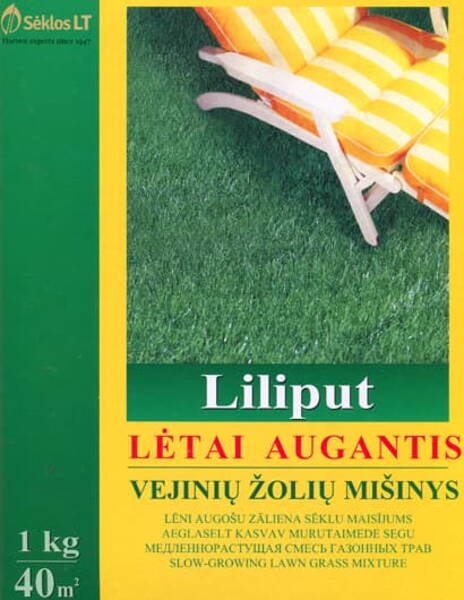

Slow-growing lawn grass mixture "Liliput".
Unique and unpretentious, requiring no frequent mowing!
Unique and unpretentious, requiring no frequent mowing!
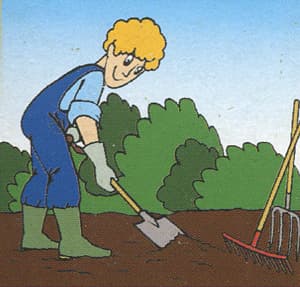
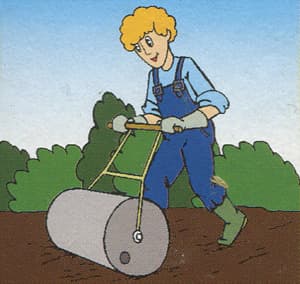
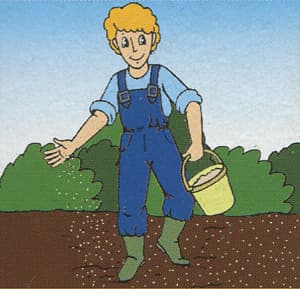
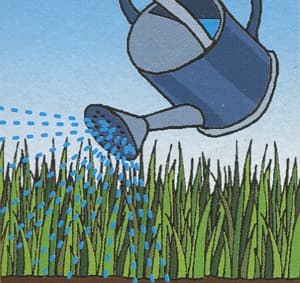
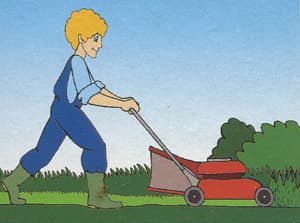
* To keep the lawn decorative for more than one year, it is recommended to regularly apply granular complex fertilizers. The average fertilizer rate is 30 g/m2. Fertilizers are evenly scattered manually or with a mechanical spreader.
Slow-growing lawn grass mixture «LILIPUT» was developed by specialists based on many years of European experience in lawn cultivation.
«LILIPUT» uses 3 meadow grasses of the best lawn selections, which are slow-growing cereals, extremely unpretentious to soil and climatic conditions.
Composition of the «Liliput» lawn mixture:
45 % Red fescue "Livista" (Festuca rubra)
45 % Red fescue "Libano" (Festuca rubra)
10 % Kentucky bluegrass "Limousine" (Poa pratensis)
* Red fescue (Festuca rubra L.) is a perennial loosely bushy plant of winter type of development. On light soils, it often gives a creeping rhizome. It grows in many natural meadows with all types of soils and under various moisture conditions. In the year of sowing, red fescue grows relatively slowly. It has very thin and narrow leaves and a large density of shoots.
It grows well in different conditions, but is especially noted for its resistance to drought and poor soils. Very frost and drought resistant. It can tolerate some amount of water on the surface of the lawn in winter. Tolerates shading better than most other grasses. One of the main components of all lawn grass mixtures.
There are three types of red fescue for lawns:
Red creeping fescue (Festuca. rubra subsp. Rubra) is the most adaptable grass of all three types: forming strong underground shoots, it can quickly cover empty spots on the lawn. Tolerates extreme summer temperatures better than other types of red fescue. Red creeping fescue takes root faster than other types. Can be used individually or together with other types of fescue to guarantee a healthy lawn.
Hair fescue (Festuca rubra trichophylla) has shorter underground shoots. The high density of shoots allows this type of grass to tolerate low mowing. High salinity tolerance makes it suitable for sowing on roadsides. Drought resistance and shade tolerance of hair fescue are higher than other types of fescue.
Chewings fescue (Festuca rubra commutata) grows in dense sods. Does not form shoots. The leaves of Chewings fescue are stiff, bristly, with a tubular, rather than open, sheath, as in sheep fescue or hard fescue. It tolerates short mowing, although after mowing the tips of the leaves may lose color. Drought resistant.
* Kentucky bluegrass (Poa pratensis L.) is a perennial rhizomatous-loosely bushy lower cereal of winter type of development. It is often found in natural growing conditions on soils rich in minerals and humus, both in the northern and southern hemispheres.
Kentucky bluegrass is a viable grass with strong underground shoots and erect leafy shoots. It begins to grow in early spring.
Kentucky bluegrass tolerates trampling well. Thanks to underground shoots, it can recover after major damage. It tolerates heat well, which makes it a good partner in grass mixtures with Tall fescue.
To get an ideal and long-lasting result, the creation of a lawn must be carried out meticulously and thoroughly...
Interestingly, over the past 100 years, the requirements for lawns have remained practically unchanged: modern designers try to fulfill the same requirements as many years ago:
- First of all, the place for creating a lawn is determined: it is best, of course, to create a green lawn in a sunny area or in a semi-shaded one.
- It is not recommended to create a lawn in an area open to winds or where snow does not melt for a long time in winter.
- Excessively moist soil is also not suitable for creating a lawn (in extreme cases, preparatory work will be required: preliminary drainage of the soil and structuring of too heavy soil).
- Work on preparing the soil for the future lawn is one of the most important in creating a lawn.
- Lawn grasses in the first year of their life do not grow very actively, unlike weeds, so it is better to treat the soil with herbicides.
- The soil must first be carefully leveled and cleaned of debris.
- The area for the lawn should be fertile enough (organic-mineral fertilizers are applied to poor soil).
- If necessary, the acidity of the soil pH is leveled.
- The soil before sowing should be finely loosened (but without turning into dust).
- Before sowing, it is necessary to compact the soil, thereby creating a dense bed (while it is necessary to roll it and then slightly loosen the topsoil).
- Starting the creation of a lawn, you need to determine the required amount of seeds (seeding rates of lawn grasses vary greatly depending on the quality of the soil and the size of the seeds).
- Having started creating a lawn, it is important to embed the seeds to the required depth, since the germination and further growth of these ornamental cereals depend very much on this.
- Seeds remaining on the surface are strongly dried out, in addition, they are actively pecked by birds. As a result, large bald spots appear on the lawn...
- The depth of seed placement directly depends on the size of the lawn grass seeds themselves, since it is much more difficult for small seeds to germinate, therefore it is recommended to sow them to a shallower depth than large ones.
- Sowing lawn grasses ends with rolling the soil or mulching.
- And, of course, even watering.
Choosing the place and type of lawn: will it be an ordinary lawn, a parterre, a flowering lawn, a sports lawn, etc.
Determining the area occupied by the future green meadow in order to calculate the required amount of seeds, soil volume and fertilizers.
In addition, it is necessary to have a good idea of how the lawn will look in composition with the rest of the elements of the garden: paths, buildings, plantings.
Particular attention should be paid to where the boundaries of the future lawn will be located: it should be convenient to mow it, and the lawn itself should not grow onto flower beds.
It is believed that the lawn should have a rectangular shape, but this is not at all necessary. You can sow a lawn in the form of a grass path, which will separate, for example, two wide borders with flowers. The lawn can be given the shape of a circle, semicircle, oval or arbitrary.
Semicircles will create a feeling of harmony and completeness, and plants will bring color and give shape to the garden, covering uneven places between the arcs.
Sowing an oval-shaped lawn in a long and narrow garden will improve